Explore a historic mountain temple near Taipei with arched bridges, maple leaves, easy trails, and a curious local legend about couples.
Overview
There’s a Taoist temple tucked in the lush hills near Taipei where local folklore warns couples not to pray together — and each autumn, its grounds blaze red with maple leaves.
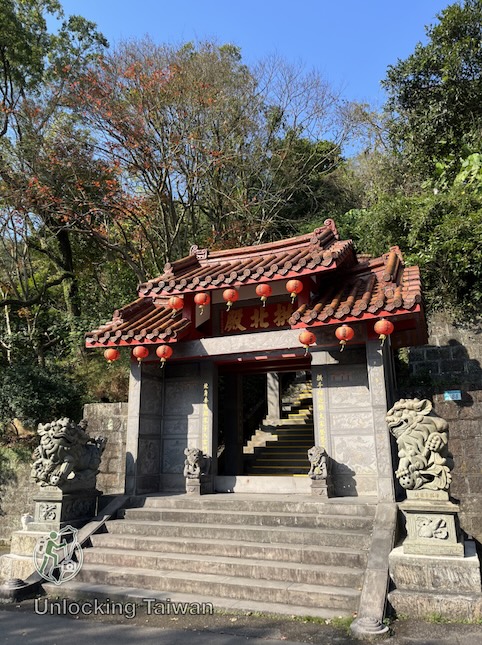
If you’ve already explored central Taipei’s bustling temples like Longshan Temple or Xingtian Temple, Gongbei Temple (拱北殿) offers a refreshing, quieter escape. Founded in 1906 in New Taipei City’s Xizhi District, this historic mountain temple blends Taoist, Buddhist, and Confucian traditions, enshrining the Taoist immortal Lü Dongbin (呂洞賓) alongside Shakyamuni Buddha and Confucius.
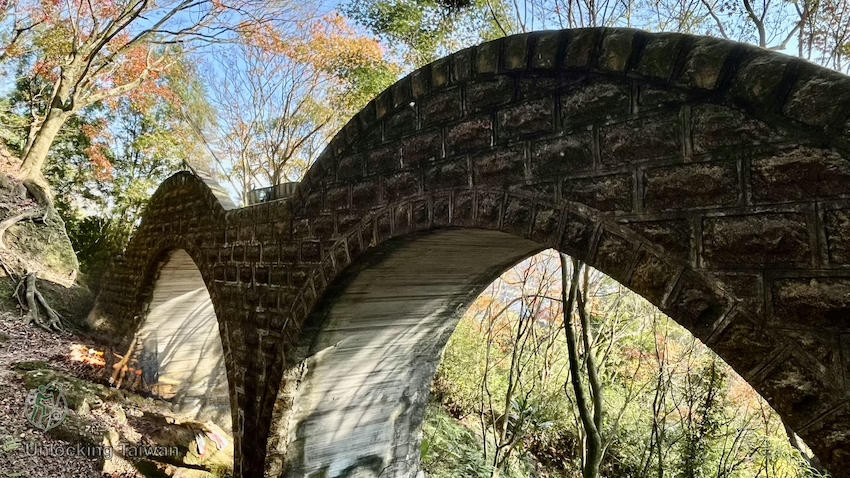
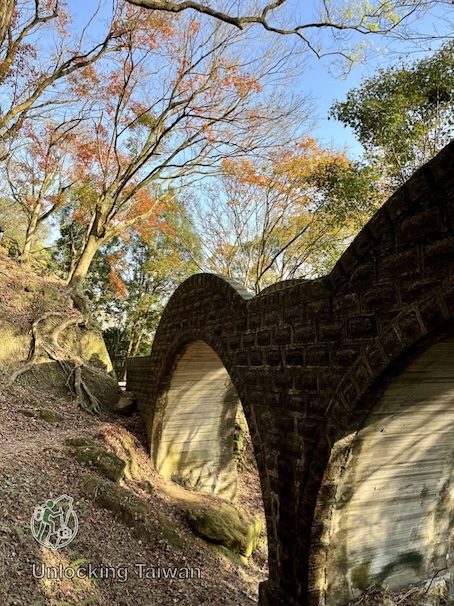
The temple is most famous for its photogenic Double Arched Bridges (雙拱橋) and stone lanterns, which create a striking, cinematic backdrop during the maple season from late November to early January. Whether you’re hunting for autumn foliage, intrigued by curious temple folklore, or simply looking for an easy, scenic half-day walk outside the city center, Gongbei Temple is a charming and lesser-known destination for international visitors.
Gongbei Temple at a Glance
- Type: Historic Taoist temple + scenic mountain walking area
- Main deity: Lü Dongbin (呂洞賓), one of the Eight Immortals
- Address: No. 88, Section 3, Xiwan Road, Xizhi District, New Taipei City (Google Maps)
- Opening Hours: Daily, 7:00 AM–5:00 PM
- Entrance Fee: Free
- Best Season: All year round
- Maple Leaves Season: Approximately late November–early January.
- Best For: Temple culture, maple viewing, temple architecture, photography, easy walks, and experiencing a quieter side of Taiwan
💡 Pro Tip: If you’re visiting mainly to photograph the Double Arched Bridges, afternoon is generally better than morning, when the bridges can be strongly backlit.
What Makes Gongbei Temple Special
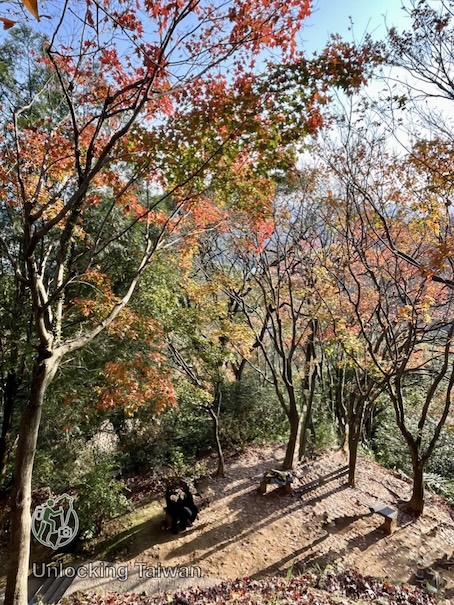
🍁 Maple Leaves & Mountain Scenery
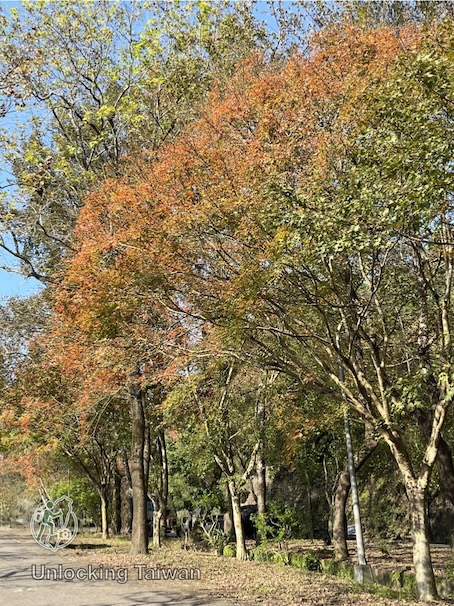
Gongbei Temple is one of the better-known maple-viewing spots near Taipei.
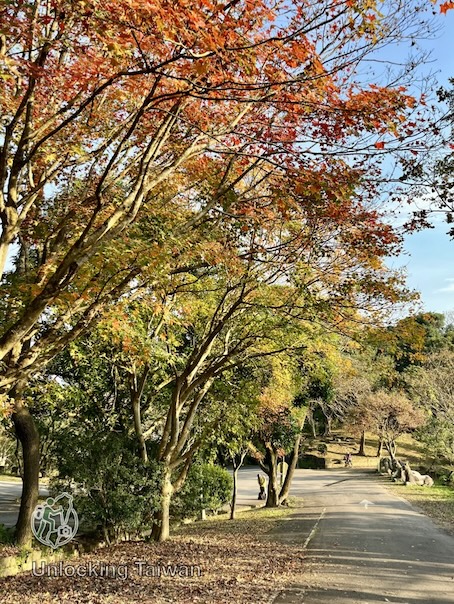
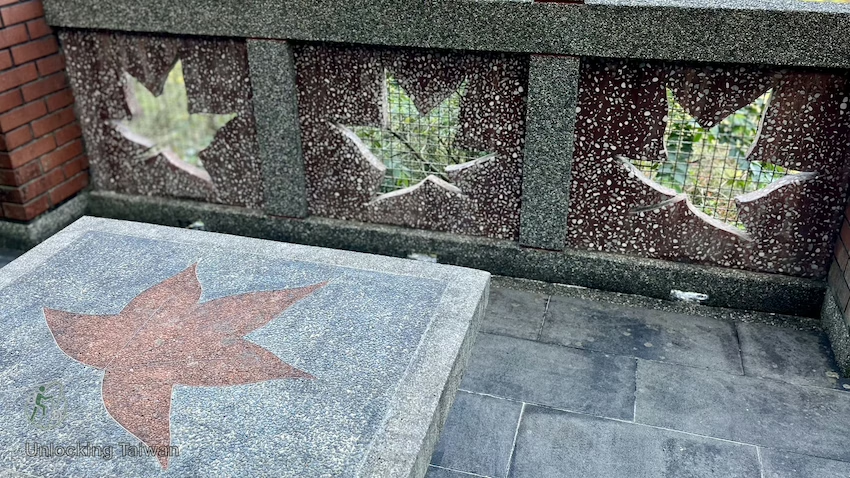
From around late November to early January, the maple trees around the temple can turn vivid shades of red and orange.
- One of the most popular times to visit
- Particularly beautiful around the Double Arched Bridges
- Mountain scenery without a long hike
- Easy to visit as a half-day trip from Taipei
The exact peak of the maple season varies each year depending on weather conditions. If you’re planning your visit specifically for the fall colors, check the temple’s official Facebook page for recent photos and updates before you go.
If you’re planning an autumn trip to Taiwan and want to see maple leaves near Taipei, this is one place worth considering.
🌉 The Double Arched Bridges
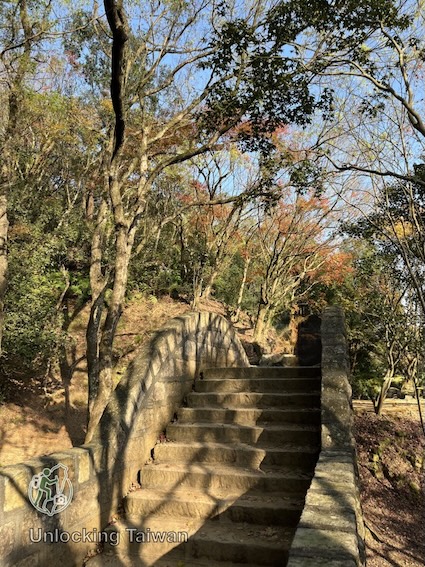
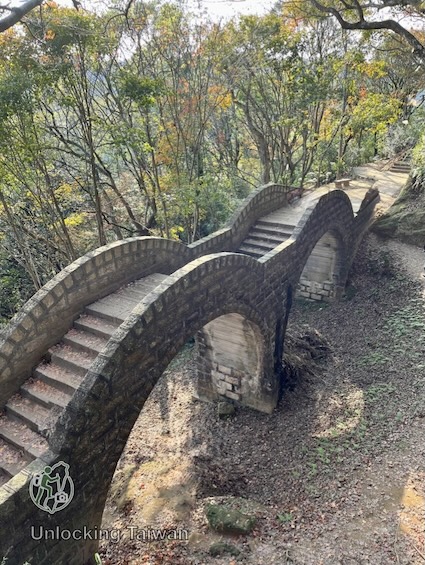
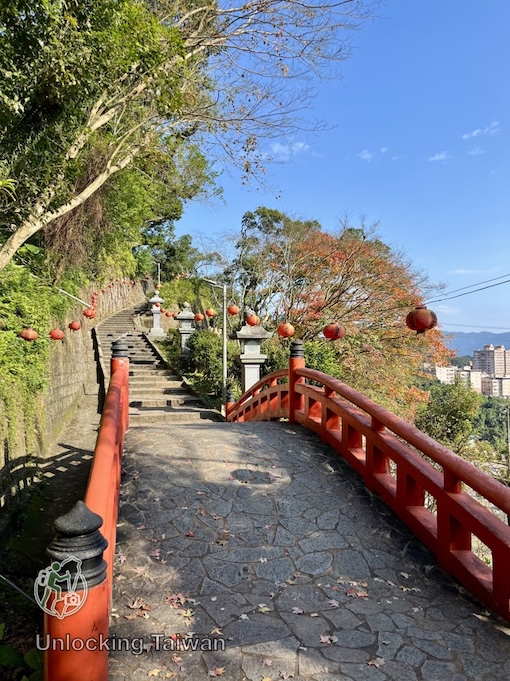
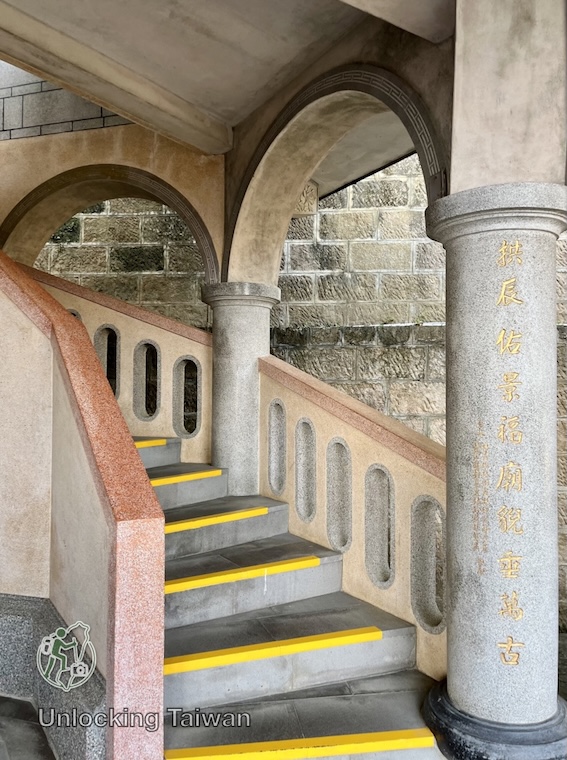
The Double Arched Bridges (雙拱橋) are the most recognizable feature of the temple.
The elegant curved bridges sit beside the main temple and are surrounded by trees. During maple season, the combination of red maple leaves and stone bridges creates one of the most photogenic scenes in the area.
The setting has such a strong wuxia (武俠) atmosphere that some visitors even come here dressed in traditional Chinese or wuxia-style clothing specifically for photos. Standing on the arched bridges surrounded by trees, it’s easy to imagine yourself in a scene from a classic martial arts novel.
Even outside autumn, the bridges are worth seeing, with lush greenery surrounding the temple grounds.
💡 Photo tip: Afternoon is generally a better time to photograph the bridges, as morning sunlight can create strong backlighting.
🕳️ The Eight Immortals Cave
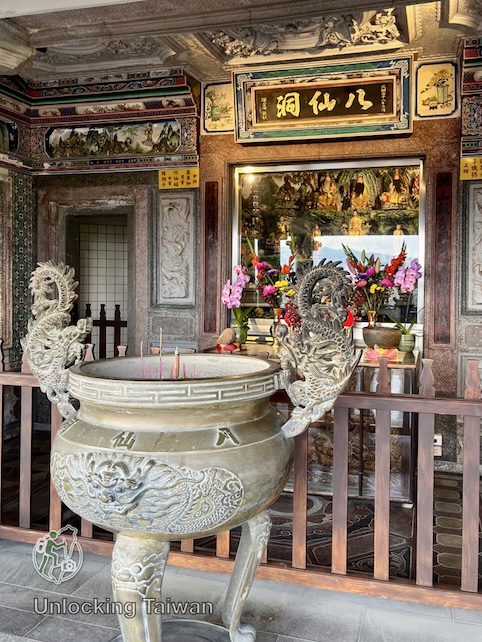
The Eight Immortals Cave (八仙洞) is a small but interesting feature inside the Gongbei Temple.
To enter from one side, you need to lower your head and bend down to pass through the narrow entrance. Inside, the passage becomes dark before you eventually emerge from the other side into the light.
The design carries a symbolic meaning.
The act of lowering yourself represents learning to let go of pride and lower your stance when facing difficulties. The darkness represents a difficult period in life, while continuing forward step by step and eventually emerging into the light symbolizes finding your way through it.
It’s a small experience, but it adds another cultural layer to your visit beyond simply photographing the temple and bridges.
🏮 Unique Japanese-Style Architecture
Gongbei Temple has an unusual visual character compared with many other Taiwanese temples.
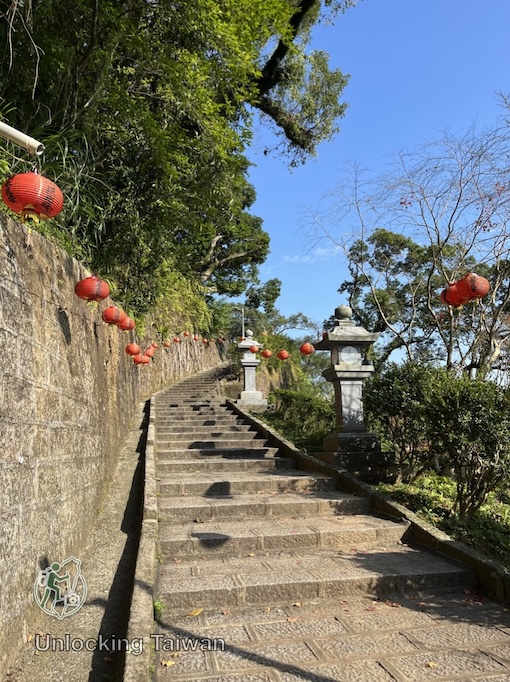
Old stone lanterns line parts of the approach, while a red bridge near the entrance adds another Japanese-inspired element.
Combined with the mountain setting and carefully landscaped grounds, the atmosphere can feel surprisingly different from the busy urban temples of central Taipei.
🚶 An Easy Mountain Walk
You don’t need to be an experienced hiker to enjoy Gongbei Temple.
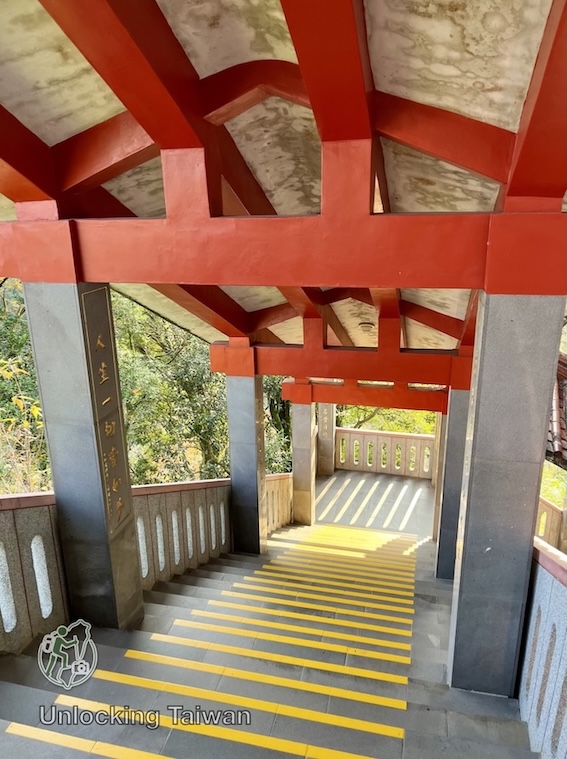
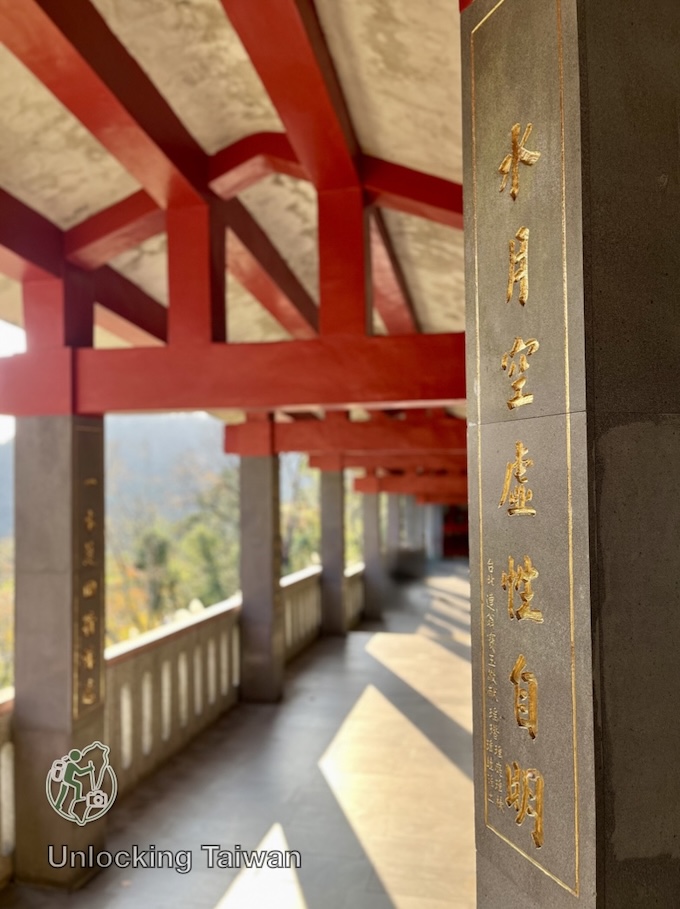
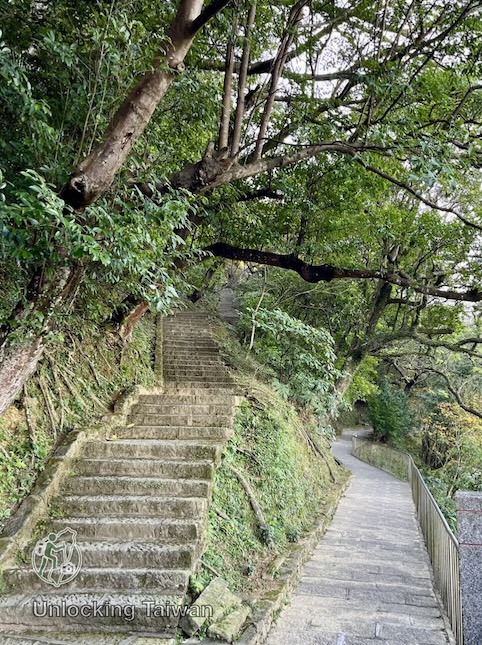
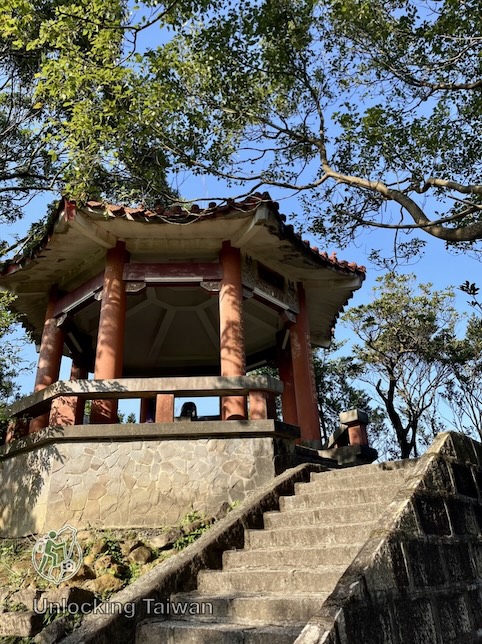
The temple grounds are connected by short paths, stairways, bridges, and landscaped areas. The rear walking route takes roughly 20–30 minutes, making this more of an easy scenic walk than a serious hike.
There are some stone steps and uphill sections, but no hiking equipment or experience is required.
Comfortable walking shoes are enough for most visitors.
🌆 Mountain & City Views
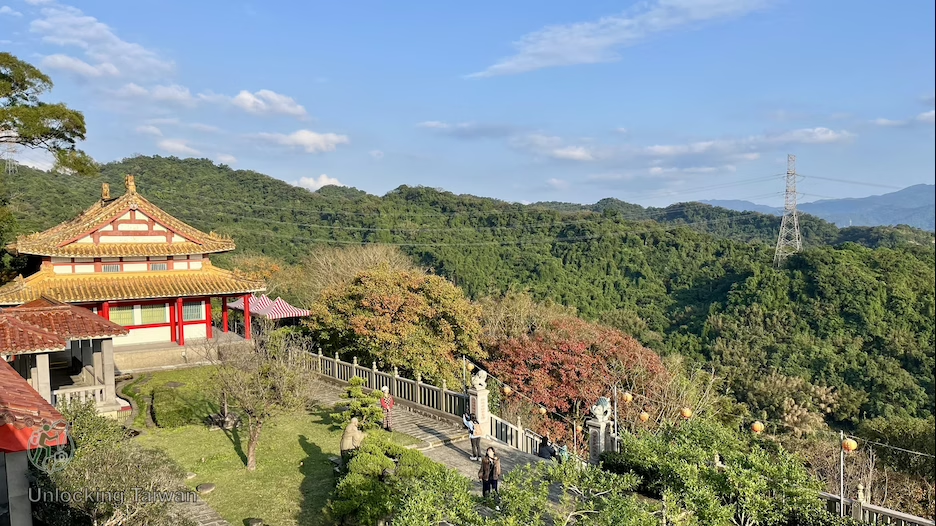
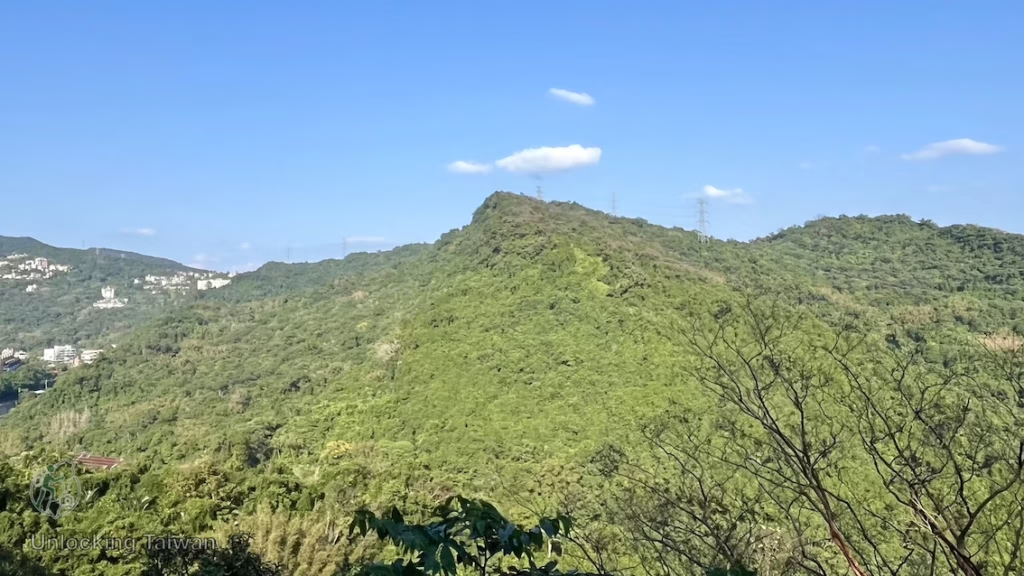
Gongbei Temple sits in the hills of Xizhi, with views toward the surrounding mountains and parts of the Taipei area.
The combination of traditional temple architecture, green hills, and the urban landscape in the distance gives this mountain temple a very different atmosphere from the temples you’ll find in central Taipei.
The Legend: Why Shouldn’t Couples Pray to Lü Dongbin?
Gongbei Temple is dedicated to Lü Dongbin (呂洞賓), one of the Eight Immortals in Taoism, and that comes with a curious local superstition.
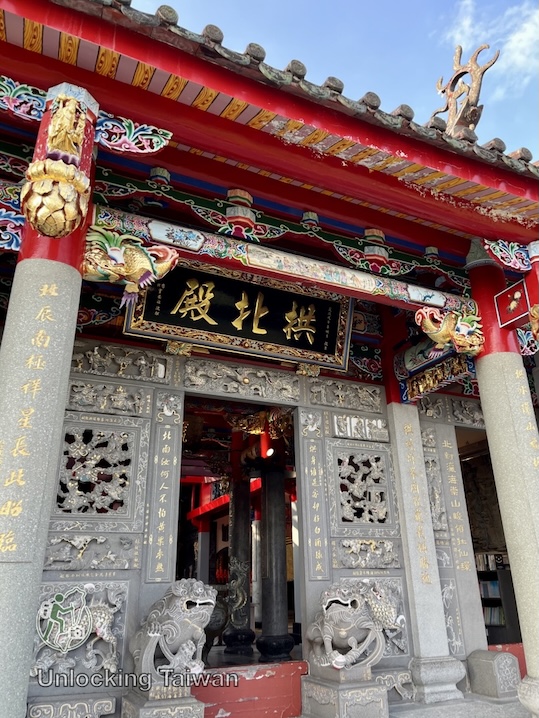
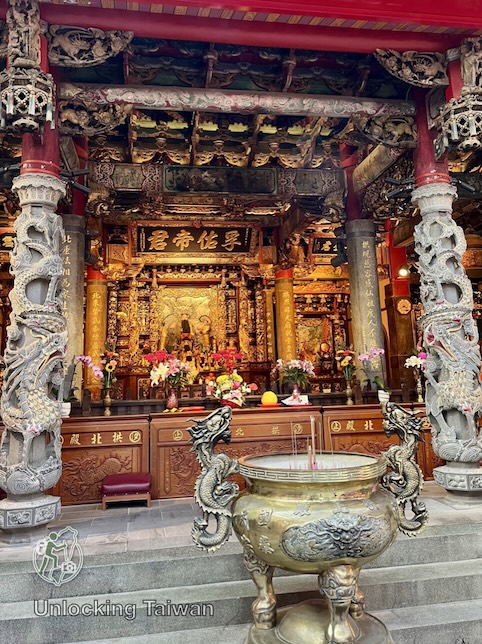
According to a popular legend, Lü Dongbin once admired another immortal, He Xiangu (何仙姑), but his feelings were never returned. Over time, the story gave rise to a belief that Lü Dongbin doesn’t particularly like seeing happy couples and might bring trouble to relationships if couples visit and pray here together.
This is why you’ll sometimes hear locals joking that couples shouldn’t visit Gongbei Temple together.

But don’t mistake the story for an actual temple rule. It’s a local superstition, and there’s another interesting detail behind it.
The wooden sword Lü Dongbin carries isn’t meant to “break couples apart.” In Taoist symbolism, the sword represents cutting away negative energy, unhealthy attachments, and bad luck.
In that sense, the story may be less about breaking up couples and more about letting go of what isn’t good for you.
Like many folk stories surrounding Taiwan’s temples, this legend sits somewhere between religion, symbolism, and local humor. You can absolutely visit Gongbei Temple with your partner — just be prepared for someone to joke that you’ve taken a risk.
How to Get to Gongbei Temple
By Public Transport
- Take one of the following buses and get off at Gongbei Temple (拱北殿).
Departure | Bus No. | Get Off At |
Xizhi Railway Station | 587, 890, F910 | Gongbei Temple (拱北殿) |
Nangang Railway Station | 896 | |
Donghu MRT Station | 896 |
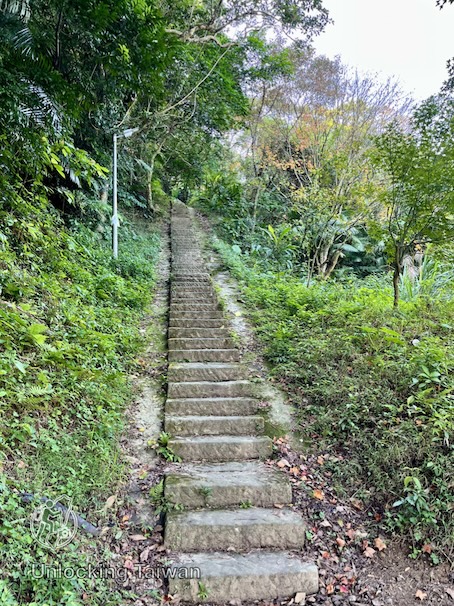
2. From the bus stop, you’ll need to walk uphill for approximately 15–20 minutes to reach the main temple.

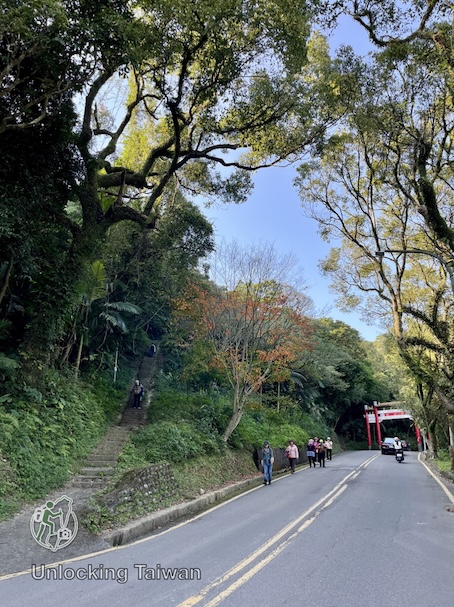
The left is a stone staircase, while the right is a paved road.
💡 Transportation Tip:
- Quickest Route from Central Taipei: Take the TRA Train from Taipei Main Station to Xizhi Station (approx. 15–20 mins), then transfer to bus 587, 890, or F910 (or a 10-minute taxi ride) to Gongbei Temple.
- Bus services to the hills are less frequent than regular city buses, so check the latest schedule before you leave.
- Google Maps works well for real-time bus routes and arrival times in this area.
- An EasyCard is the easiest way to pay for Taipei buses and MRT rides.
👉 Getting an EasyCard before you arrive:
An EasyCard is the easiest way to pay for Taipei buses and MRT rides. If you’d like to pick one up at Taoyuan Airport, both KKday and Klook offer EasyCard options, with 4G SIM add-ons available.
💡 Disclosure: This article contains affiliate links. If you book through them, I may earn a small commission at no extra cost to you. Thanks for supporting Unlocking Taiwan!
By Car/Scooter
Navigation: Gongbei Temple
Parking:
- Free parking is available directly in front of the temple.
- The parking area appears to have more than 100 spaces, but it can fill up quickly on weekends during the peak maple season, especially from December through early January.
- Arrive early if you’re visiting on a weekend during maple season, as you may encounter a queue for parking.
Weather Forecast & Live Conditions
- Central Weather Administration website: Xizhi District
- Nearby live camera: This camera does not show Gongbei Temple itself, but it provides a live view of the nearby National Freeway 3 section in Xizhi.
Things to Know Before You Go
- 🍁 Maple season is seasonal: Late November to early January is the usual period, but peak color varies each year. If you’re visiting for the fall colors, check Gongbei Temple’s official Facebook page for recent photos and updates.
- 🦟 Bring insect repellent: Mosquitoes and biting midges can be present along the rear walking paths, especially in warm or humid weather.
- 🚻 Restrooms and drinking water: Restrooms and drinking fountains are available within the temple grounds.
- 📸 Afternoon is better for photography: Morning light can create strong backlighting around the Double Arched Bridges.
- 🚌 Check the bus schedule: Bus services to Gongbei Temple are less frequent than regular city routes.
- 👟 Wear comfortable shoes: There are stone stairs and some uphill sections.
- 👶 Strollers may be inconvenient: The temple grounds include stairs, so a baby carrier is more practical if you’re traveling with an infant.
- 🙏 This is an active temple: Be respectful of worshippers and ongoing religious activities.
- 📷 Be considerate when taking photos: Avoid photographing people while they are praying without permission, and follow any signs or instructions posted around the temple.
- 📅 Expect crowds during peak maple season: Weekends can be particularly busy.
FAQ
How long does it take to visit Gongbei Temple?
Allow 30–60 minutes for a quick visit.
During maple season, especially if you enjoy photography, plan for around 1.5–2.5 hours to explore the temple grounds at a relaxed pace.
Can I visit Gongbei Temple if I’m not religious?
Absolutely. You don’t need to be religious to visit Gongbei Temple.
Visitors are welcome to explore the temple grounds, admire the architecture, walk around the surrounding paths, and enjoy the seasonal maple scenery. If you enter the main temple or observe people praying, simply be respectful of worshippers and ongoing religious activities.
Is Gongbei Temple suitable for children and older visitors?
Yes. The temple grounds are developed and the walking route is short, so children and older visitors who are comfortable with stairs can generally enjoy the visit.
However, there are quite a few stone steps and some uphill sections. If you’re traveling with a baby, a baby carrier is more practical than a stroller.
What should I wear when visiting Gongbei Temple?
There is no special dress code for visiting Gongbei Temple, but remember that it is an active Taoist temple.
Wear comfortable, respectful clothing and avoid overly revealing outfits. Comfortable shoes are also recommended because you’ll encounter stone steps and uphill paths.
Can I take photos inside Gongbei Temple?
Photography is generally part of the experience at Gongbei Temple, especially around the bridges, architecture, and maple trees.
However, this is an active place of worship. Be respectful when people are praying, avoid photographing worshippers without permission, and follow any photography restrictions or signs posted on site.
When is the best time to see maple leaves at Gongbei Temple?
The usual maple season is late November to early January, although the exact peak varies each year depending on weather conditions.
If you’re planning your visit specifically for the fall colors, check Gongbei Temple’s official Facebook page for recent photos and updates before you go.
Can couples visit Gongbei Temple together?
Yes.
The belief that couples shouldn’t visit Gongbei Temple together is a local superstition associated with Lü Dongbin, not a temple rule.
You can visit and pray here with your partner. The story is best understood as local folklore rather than something you need to take literally.
💡 You might also like:
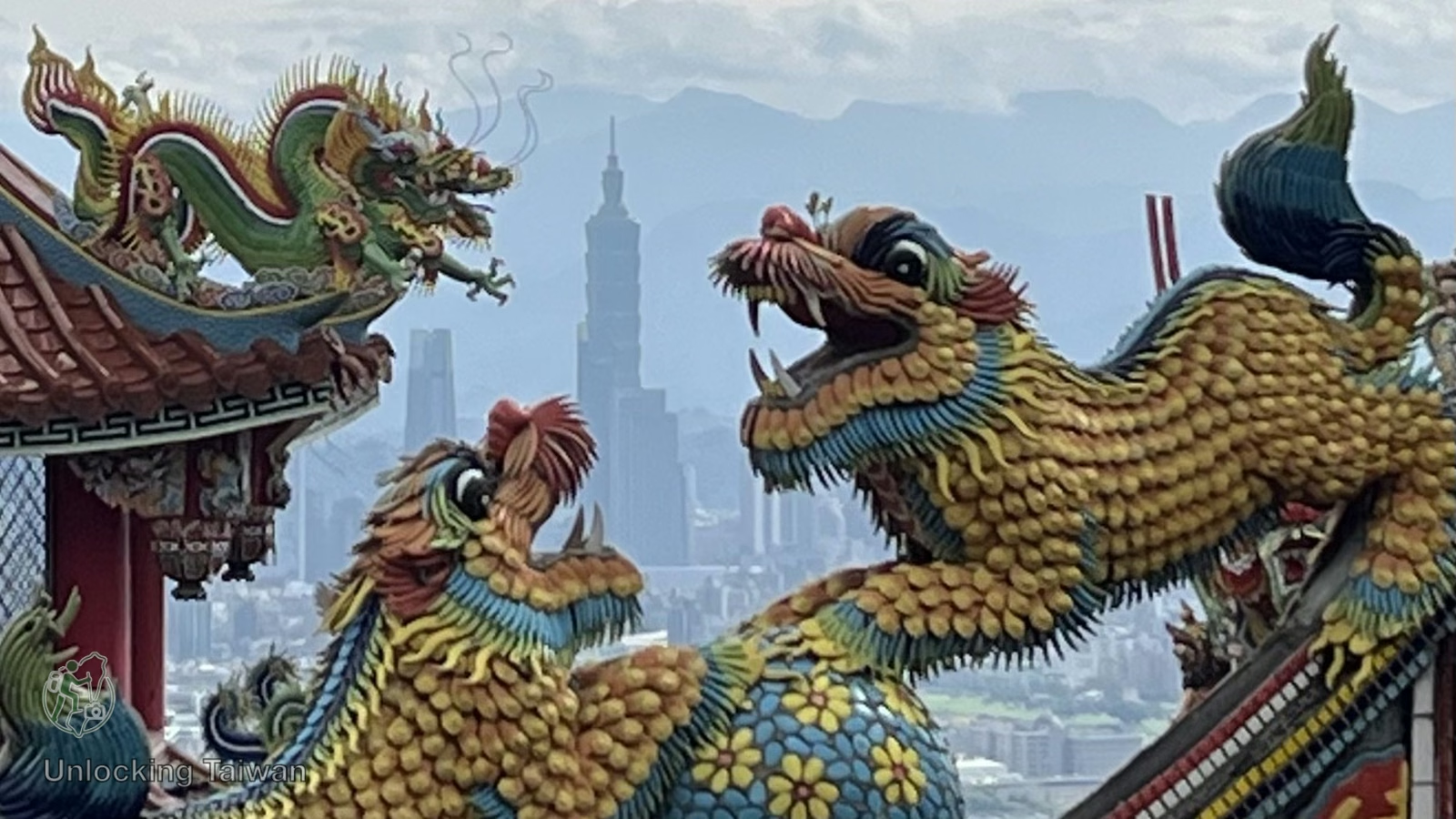
If you enjoyed Gongbei Temple, check out my guide to Bishan Temple (碧山巖) in Neihu — another local mountain temple in Taipei, with Taipei 101 views, a temple café, and a very different atmosphere.
→ Read: Bishan Temple (碧山巖): A Local Mountain Temple with Coffee & Taipei 101 Views
Final Thoughts
Gongbei Temple isn’t an unknown place to locals — it’s a well-known destination near Taipei, especially during maple season.
But for international visitors, it offers a side of Taiwan that’s easy to miss: a historic Taoist temple surrounded by mountain scenery, maple trees, beautiful bridges, and easy walking paths.
If you’ve already seen Taipei’s famous temples and want to experience something a little different, Gongbei Temple is an easy addition to your Taiwan itinerary.
And if you’re traveling with your partner?
Maybe just don’t tell them about the Lü Dongbin legend until after the visit. 😉
☕ Found this guide useful?
Unlocking Taiwan is an independent project dedicated to creating clear, foreigner-friendly travel guides that make exploring Taiwan easier.
If this guide helped you discover somewhere new, you can support the project with a coffee.
👉 Support the project here