Critical Safety Alerts for Snow Mountain, the Holy Ridge, and Taiwan’s Complex Winter Terrain.

Every winter, Shei-Pa National Park authorities release warnings about high-risk areas. These lists are not meant to restrict access without reason; they are written in the aftermath of real accidents and real loss of life.
Winter transforms Taiwan’s high mountains into a completely different world. Routes that feel straightforward in summer can become technical, high-consequence mountaineering terrain once snow, ice, wind, and whiteout conditions arrive.
This guide is written specifically for hikers and climbers planning winter ascents in Shei-Pa National Park, especially around Snow Mountain (Xueshan) and the Holy Ridge (Shengling Line). It is not meant to discourage you, but to help you make informed decisions before stepping into terrain where mistakes are rarely forgiven.
Why Winter in Taiwan Is More Dangerous Than It Looks
Many visitors underestimate Taiwan’s winter mountains because their elevations are lower than those of the Himalayas or Alaska. In reality, Taiwan’s winter risks are shaped by a humid island climate and mixed snow conditions that behave very differently from dry alpine environments.
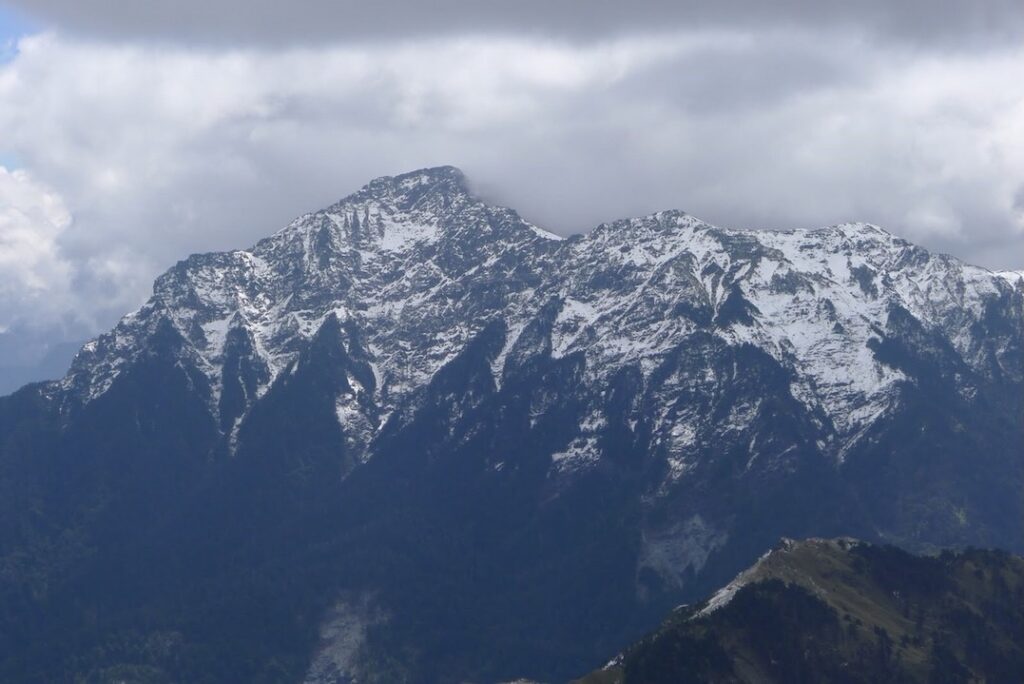
Key factors that make winter travel in Taiwan especially dangerous include:
- Wet, heavy snowfall — often mixed with rain
Snow in Taiwan is rarely dry powder. Most winter storms bring wet snow, sleet, or rain–snow mixtures. Gear must be fully waterproof, and critical safety equipment should never be externally attached, as moisture and icing can quickly turn loose gear into a liability. - Soft snow and slush dominate most conditions (>90%)
Due to high humidity and rapid warming after cold fronts, the majority of winter snow encountered is soft, waterlogged, or slush-like snow–ice. Only a few permanently shaded sections — most notably around Xueshan Main Peak at 10.4K — consistently refreeze into hard ice. - Thin snow cover with exposed rock
In recent years, snowfall has rarely buried entire trails. Most routes are covered by a thin snow layer (often less than 20 cm), with rocks, steps, and uneven terrain still exposed. - Mixed terrain: soft snow over rock
These factors combine to create one of Taiwan’s most dangerous winter scenarios: unstable snow sitting on exposed rock. Traction is inconsistent, footing changes constantly, and slips often occur during transitions between snow, slush, ice, and bare stone — not on obvious ice alone. - Rapid weather changes and strong ridge winds
Sudden whiteouts, temperature swings, and post–cold-front winds increase fatigue, accelerate heat loss, and reduce decision-making margins.
In winter, these factors combine to create conditions where a single slip can be fatal.
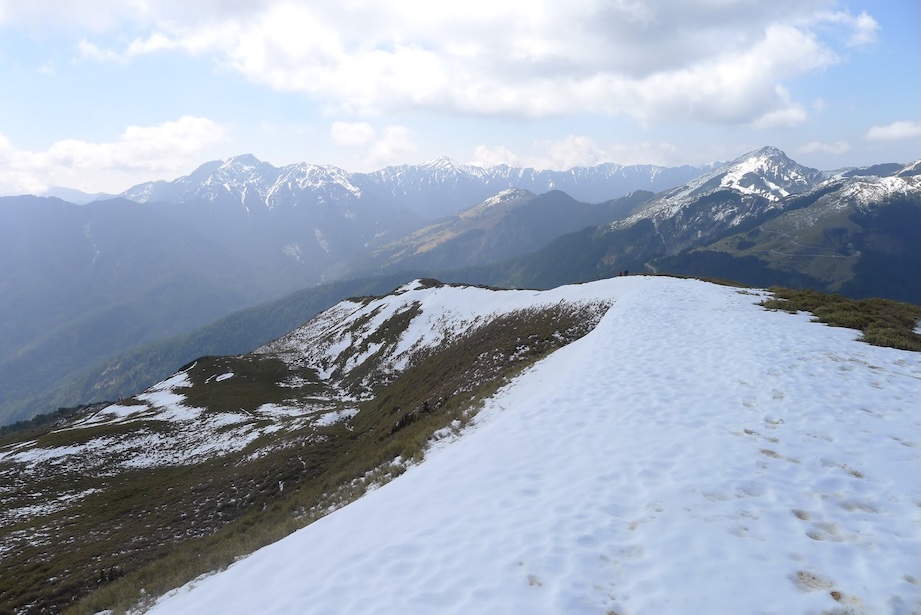
High‑Risk Winter Sections in Shei‑Pa National Park
The following areas are identified by park authorities and rescue teams as winter accident hotspots. These sections demand not only proper equipment, but also solid snow travel skills, reliable route-finding ability, and conservative judgment.
Location | Hazards & Conditions |
Xueshan Main Trail 10.4K – 10.9K (Glacial Cirque) | • Deep accumulated snow and hard ice. • Steep slopes with run-out exposure. • This is a frequent location of winter accidents. |
Xueshan Main Trail 8.8K (Black Forest) | • Hidden ice beneath forest shade. • High slip-and-fall risk. |
Daba Trail 9.6K – 10K | • Icy trails prone to slipping. • The path is often covered by snow, making navigation difficult and the route unclear. |
Base of Dabajian Mountain to Xiaobajian | • Icy, exposed rock sections prone to slipping. |
V-Shaped Cliff Before Pintian Mountain | • Ice-covered funnels and steep, confined terrain. • Snow accumulation obscures route definition. • Falls here are difficult to self-arrest. |
Holy Ridge: Sumida Cliff & Pintian Cliff | • Extremely difficult cliff terrain covered in ice/snow. • Consequences of a fall are severe or fatal. • Warning: Technical climbing gear and skills are mandatory. This is not a hiking trail in winter; it is a technical climb. |
Xueshan West Ridge (Ridge Line) | • Long, committing ridge traverse. • Persistent strong winds and extreme wind chill. • Warning: High hypothermia risk. Following multiple fatalities, this route is considered high-risk even for experienced teams. |
Source: Shei-Pa National Park Climbing Forum (Original Post in Chinese)
Equipment Does NOT Equal Ability
One of the most common and dangerous misconceptions is that carrying winter gear automatically makes a route safe.
Crampons, ice axes, and helmets are tools, not guarantees. Without proper training and experience, they can provide a false sense of security.
True winter readiness includes:
- Knowing when not to continue
- Understanding snow conditions and terrain traps
- Managing fatigue, cold, and time pressure
- Making conservative decisions under stress
In winter mountaineering, judgment matters more than strength.
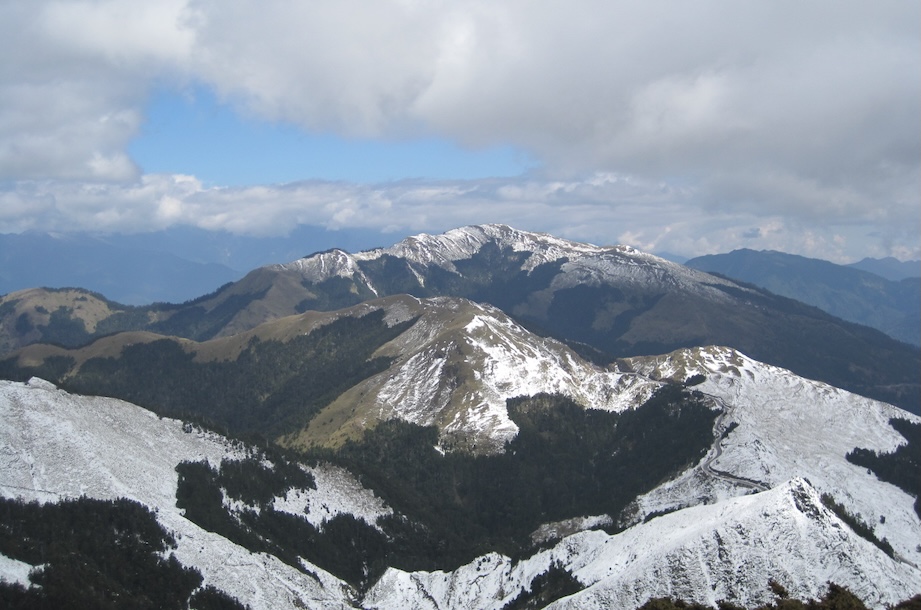
A Real Rescue Case: Why Satellite Communication Matters
In early January 2026, a solo foreign climber was involved in an accident on Pintian Cliff while attempting the Holy Ridge in winter conditions.
Although he carried snow equipment, his backpack fell into a ravine, and he did not have a headlamp. What saved his life was a Garmin inReach satellite communicator, which allowed him to send an SOS despite poor conditions.
Rescue teams — including park rangers, police, firefighters, and air support — conducted a difficult night rescue in freezing temperatures and snow‑covered terrain.
(Video Source: United Daily News, Jan 8, 2026)
Takeaway:
Do not assume cell coverage in Taiwan’s high mountains.
Satellite communication is highly advisable year-round and becomes critical in winter, when even minor incidents can escalate rapidly.
Before You Decide to Go: A Reality Check
Ask yourself honestly:
- Have I traveled on steep snow and ice without a fixed rope?
- Can I self‑arrest reliably on hard ice?
- Do I know when to turn around — even after investing time and effort?
- Am I prepared for an unplanned night out in sub‑freezing temperatures?
- Do I have a satellite communicator and know how to use it?
Nature is indifferent to your struggle.
The only thing that keeps you safe is your preparation and your judgment.
Related reading
- Unlocking Taiwan’s 100 Peaks (Baiyue): What They Are and How to Start Your Journey
An overview of Taiwan’s 100-peak system, trail difficulty grading, and essential resources for planning.
- How to Get Hiking Permits in Taiwan: The Complete Application Guide for Foreign Hikers
A clear guide to Taiwan’s hiking permit system, including national park entry rules, application timelines, foreigner quotas, and hut or campsite reservations for foreign visitors.
- Where to Buy Hiking Gear in Taipei: Best Outdoor Stores Near Taipei Main Station
A practical guide to trusted outdoor shops near Taipei Main Station, where experienced staff can help assess winter gear needs and offer local, Taiwan-specific advice.